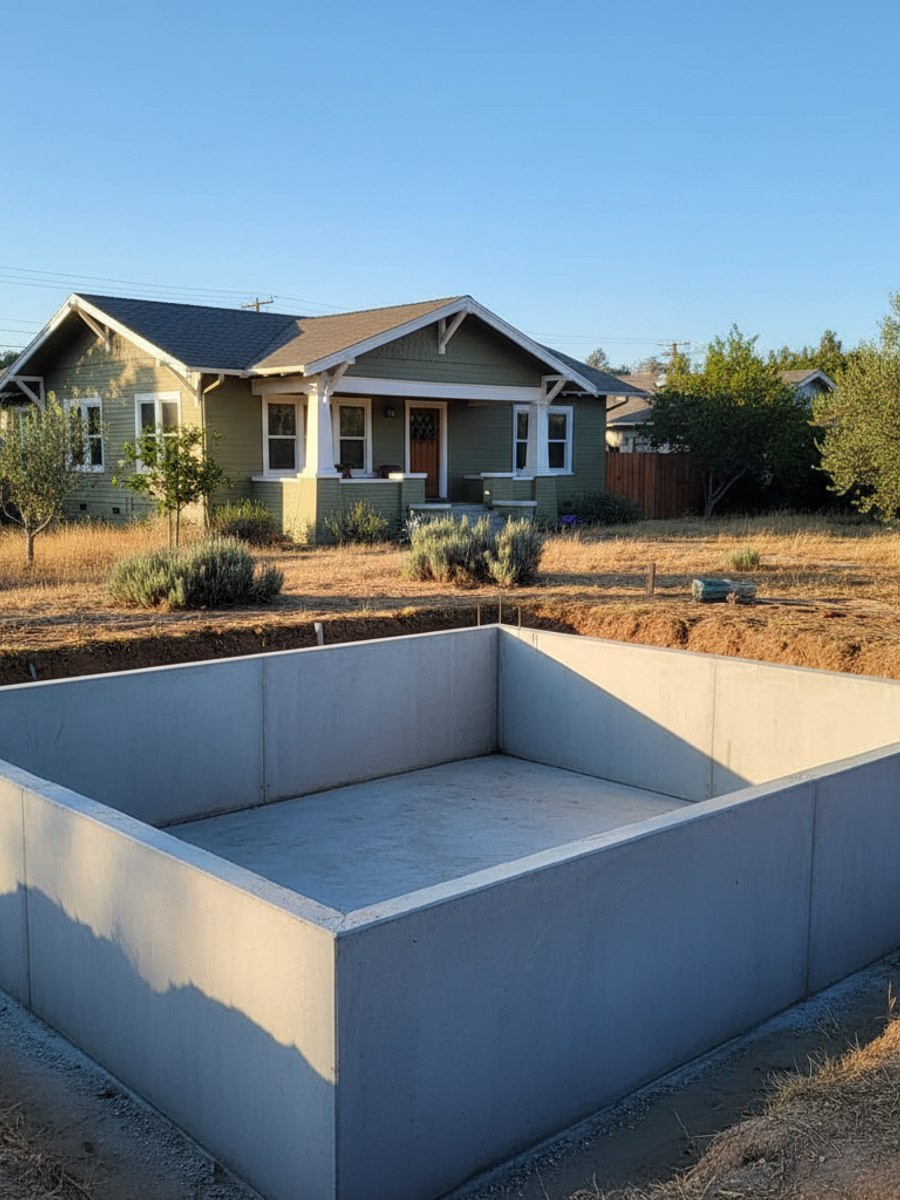
People ask us when the best month is to pour a driveway or a patio slab, expecting a simple answer like "spring." The real answer depends on what's happening under the slab and above it at the same time. Concrete doesn't care what the calendar says. It cares about temperature, humidity, and how fast the water in the mix is leaving it. In La Mirada, that means the good windows are real, but they're narrower than most homeowners assume, and the bad windows aren't as bad as people think either, if the crew knows how to work around them.
What heat actually does to a pour
Fresh concrete needs to lose its water slowly, through hydration, not fast, through evaporation. When surface moisture leaves faster than the mix can replace it from below, you get plastic shrinkage cracks, thin surface cracks that show up within hours of the pour and never go away. Hot, dry, windy days are the worst combination for this. La Mirada gets that combination in late summer and early fall, especially during Santa Ana wind events in September and October, when temperatures can push past 95°F and humidity drops into the teens.
That doesn't mean we don't pour in September. It means we pour early, sometimes before 7am, use an evaporation retarder on the surface, and get curing compound or wet burlap down within minutes instead of hours. A crew that hasn't planned for that will hand you a driveway with hairline cracking across the whole surface within a week.
Why the rainy season changes the schedule, not just the weather
Most of La Mirada's rain falls between November and March, and a wet winter here can still put down 12 to 15 inches in that stretch. Rain on fresh concrete before it sets is bad, it washes out the surface paste and leaves a pitted, weak top layer. But the bigger issue is usually before the pour, not during it. Wet subgrade doesn't compact the way dry subgrade does. If the soil under a driveway or a patio is saturated when we grade and compact it, it can settle unevenly once it dries out months later, and that shows up as a slab that's cracked or has dipped at one edge.
We can still pour in December or January. We just watch the forecast closely, stage the work around dry stretches, and give the subgrade time to reach the right moisture content before compaction instead of fighting mud.
The clay soil under most of this town
A lot of La Mirada sits on clay-heavy alluvial soil, the kind that swells when it's wet and shrinks and cracks when it dries out. That movement is slow, it happens over months, but it's exactly what causes slab foundations and patio slabs to crack or heave years after the pour if the subgrade wasn't prepped right. Timing matters here in a way that has nothing to do with cracking during the pour itself. Excavating and compacting during a stable, moderate stretch of weather, rather than right after a storm or during a heat spike, gives you a subgrade that isn't in the middle of expanding or contracting when we build on top of it.
This is also why we don't treat every lot in La Mirada the same. A slab going in near a mature tree with thirsty roots behaves differently than one on an open, newer lot, and the season we'd pick can shift because of that alone.
Older streets versus newer construction
Most of La Mirada was built out in the 1950s and 60s, which means a lot of the driveways, walkways, and curb cuts we get called out to repair are 50 to 60 years old, poured back when rebar was used less consistently and control joints were spaced further apart than we'd space them today. On those older lots, replacing a section of walkway or driveway often means dealing with tree root intrusion, old base material that's turned to dust, or a slab that was never doweled into the sidewalk next to it. Newer infill construction has more consistent subgrade and drainage, but even there, we still check the grading, because a lot that was fine when built can develop low spots after 20 years of soil settling.
Permits and the practical timeline
Driveway aprons, sidewalks, and anything touching the public right of way usually need an encroachment permit through the city, separate from a standard building permit. Retaining walls over a certain height and any new slab foundation work typically go through plan check before a permit is issued. None of that is seasonal, you can apply any time of year, but inspection scheduling can slow down around the holidays in late December, which is worth knowing if you want work wrapped up before a specific date. A survey or property line check isn't usually required for a driveway or patio replacement on an existing footprint, but it becomes relevant if you're extending a slab closer to a property line than what's already there.
So when should you actually pour
- March through May is usually the best stretch. Rain has mostly tapered off, temperatures sit in the 65 to 80°F range, and the ground has had a chance to dry out evenly after winter.
- October and early November is a close second, after the worst of the Santa Ana heat but before the rain settles in. Some years this window is better than spring.
- Summer works, but it needs an early start time and a crew watching the surface constantly. We wouldn't recommend a DIY pour in August in La Mirada without real experience managing evaporation.
- Winter is doable for most jobs if you're flexible on the exact week and don't mind working around storm forecasts.
As a rule of thumb, expect a new driveway or patio slab to handle foot traffic after about 7 days and vehicle weight after 7 to 10, with full design strength around 28 days. That timeline barely changes with the season, hot weather speeds up the early set but doesn't speed up long-term strength gain, and cold weather slows both down slightly without stopping them.
If you're planning a pour and want to talk through the timing for your specific lot, that's the kind of thing we walk through before we ever quote a job. You can see the range of concrete work we handle and get a sense of what applies to your project.