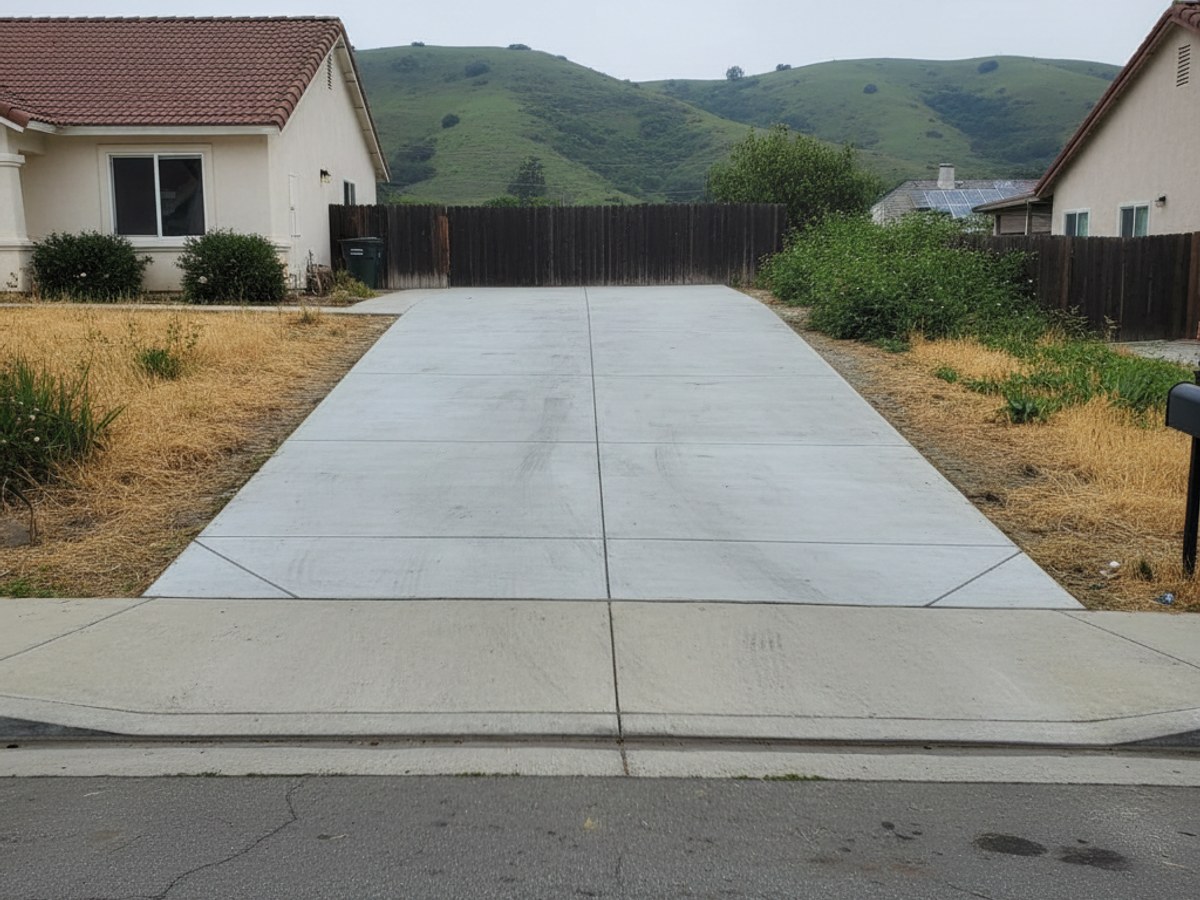
A new driveway in La Mirada usually runs somewhere between $6,000 and $14,000 depending on size and finish. A slab foundation is more. That's real money to hand over based on a friendly voice and a low number written on a business card. The trouble with a bad concrete job is that it rarely shows up on day one. It shows up eighteen months later as a crack running corner to corner, or a patio that's pooling water against the back door instead of draining away from the house.
Here's what separates a contractor who knows what they're doing from one who's just good at bidding jobs.
Check the license, and actually look it up
Concrete flatwork and slab work in California generally falls under a C-8 concrete contractor license through the CSLB, sometimes under a general B license if it's part of a bigger project like an addition. Don't take someone's word for it. Go to the CSLB website, put in the license number, and check that it's active, that the bond is current, and that they carry workers' comp. A lot of the lowest bids you'll get come from crews working under someone else's license number or no license at all. If a worker gets hurt on your property and there's no comp coverage, that liability can land on you.
Ask what's going under the slab, not just what's going on top
Most of La Mirada was farmland before it was built out as a planned community in the late 1950s and early 60s, and the soil under a lot of these lots is clay and clay-loam. Clay swells when it's wet and shrinks hard when it dries out, and southern California swings between a dry ten months and a rainy stretch from December through March. If a contractor doesn't talk about base prep, that's a problem. A proper base is usually 4 inches of compacted aggregate base, compacted to something like 90% or better, with attention paid to moisture content before the pour. Skip that step and the slab will move with the ground underneath it, no matter how good the concrete itself is.
The same goes for reinforcement. Wire mesh meets code minimum for a lot of flatwork, but for a driveway that takes the weight of two cars every day, rebar on an 18-inch grid holds up better over time, especially on older streets with mature ficus and camphor trees whose roots have been working under sidewalks and driveways for sixty years. Ask which one they're using and why, not just what it costs.
Ask about the mix, the joints, and the cure time
A 3,000 psi mix is common minimum for residential flatwork, but a lot of contractors will run 3,500 to 4,000 psi for driveways that see regular vehicle traffic. Slump matters too. A wetter mix is easier to finish fast, but it's weaker once it cures, and some crews add water on site to save time on a hot day. That's worth asking about directly.
Control joints should get cut within 24 to 48 hours of the pour, before the slab decides where to crack on its own. As a rough rule, joint spacing in feet should be about two to three times the slab thickness in inches, so a standard 4-inch driveway slab wants joints roughly every 8 to 10 feet. In La Mirada's summer heat, when August and September regularly sit in the 90s, a slab that isn't kept damp or covered while it cures can dry too fast on the surface and shrink-crack before it ever gets used. You can usually walk on a new slab in a day or two. Full vehicle weight generally waits about 7 days, and the concrete keeps gaining strength up to around 28 days.
Permits are not optional, even for a driveway
The City of La Mirada issues building permits for slab work tied to a structure, and driveway approaches or sidewalk sections that touch the public right of way often need a separate encroachment permit, since that strip of concrete in front of your house technically belongs to the city. A contractor who tells you a new driveway apron doesn't need a permit is wrong more often than they're right, and pulling one after the fact, if there's ever a problem, costs more than doing it up front. Inspections on this kind of work usually check rebar placement and base compaction before the pour, which is one reason a job gets staged rather than rushed straight from dig-out to concrete truck in the same afternoon.
HOA rules are hit or miss depending on which part of town you're in. Some of the newer tracts have design review for things like stamped concrete color or pattern. Older established streets closer to the center of town mostly don't.
What to walk away from
- A bid that's dramatically lower than every other one you got. Usually means a thinner slab, no rebar, or unlicensed labor.
- Anyone who wants the full amount in cash, upfront, before work starts.
- A contractor who can't tell you the psi of the mix or won't put the specs in writing.
- No mention of control joints, or vague answers about where and when they'll cut them.
- Someone who never asks about your soil, your slope, or where the water on your lot actually goes when it rains hard.
- Pressure to schedule the pour before a permit is even applied for.
None of this is complicated once you know to ask. It just takes actually asking, and paying attention to whether the answers are specific or vague. If you're weighing a driveway, a patio, or a repair job and want to talk through what your lot actually needs before you get quotes, that's the kind of conversation Horizon Concrete Solutions has with homeowners all over La Mirada every week.